Ready to help treat your pet to a healthy life?
Why Does Your Cat Lick You?
By : Kelli Rascoe & Trupanion Staff | Updated Mar 5, 2024
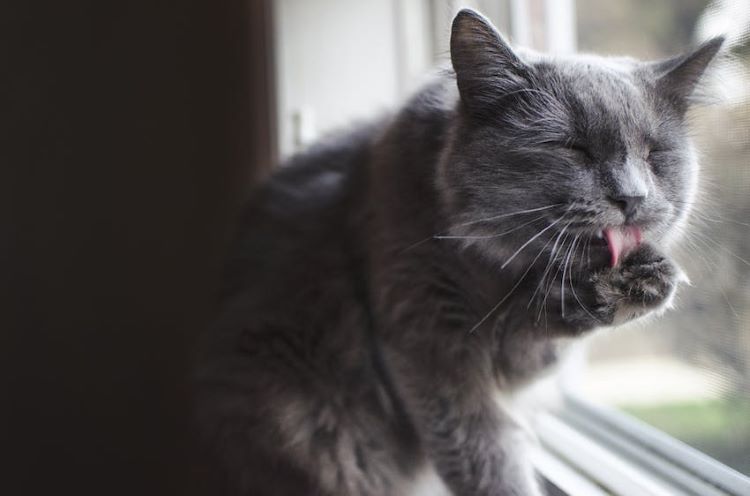
A cat licking themself is a normal sight and something you probably see every day if you're a feline pet owner. After all, cats tend to groom themselves on a regular basis. But what about when your cat licks you instead? Why do cats lick people in the first place? As with all curious pet behaviors, it's a good idea to try and figure out what your pet is trying to tell you.
Unlike dog "kisses," a feline lick can mean a wide variety of things. It's also a behavior that's nowhere near as common in cats as it is in dogs. And let's face it — that scratchy cat tongue can be a bit startling. So, in the interest of understanding what your pet is attempting to communicate as well as keeping you as comfortable as possible, it's time to find the answer to the question, why do cats lick you?
Is it normal for a cat to lick a human?
It's common knowledge that dogs often lick people, but what about our feline friends? While not all kitties engage in this behavior, it is quite normal for a cat to lick a human. The truth is that cats lick humans for a multitude of reasons, though it's typically a sign of affection or an attempt at bonding.
“When trying to figure out why a cat exhibits any behavior, the best course of action is it determine the motivation behind the behavior in your cat’s environment," explains Trupanion veterinarian Dr. Caroline Wilde. "For example, if you’re just lying on the couch, and the cat is resting and seems content, it can be a normal grooming behavior or sign of affection."
That said, it's important to be in touch with your pet's usual behavior. Cats are creatures of habit and tend to not change their behavior drastically unless something is wrong. If your pet of several years suddenly starts licking you despite never having done so before, it's a good idea to check in with their veterinarian.
How to get your cat to stop licking you
Just as cats have different preferences, you may not enjoy it when your kitty licks you. If you're bothered by your cat's tongue, try to gently redirect their behavior to something else. Introducing a toy may help here. You can also reposition yourself and start petting your cat in a way that makes it tricky for them to lick you.
Naturally, you'll still want to figure out why your cat is licking you in the first place.
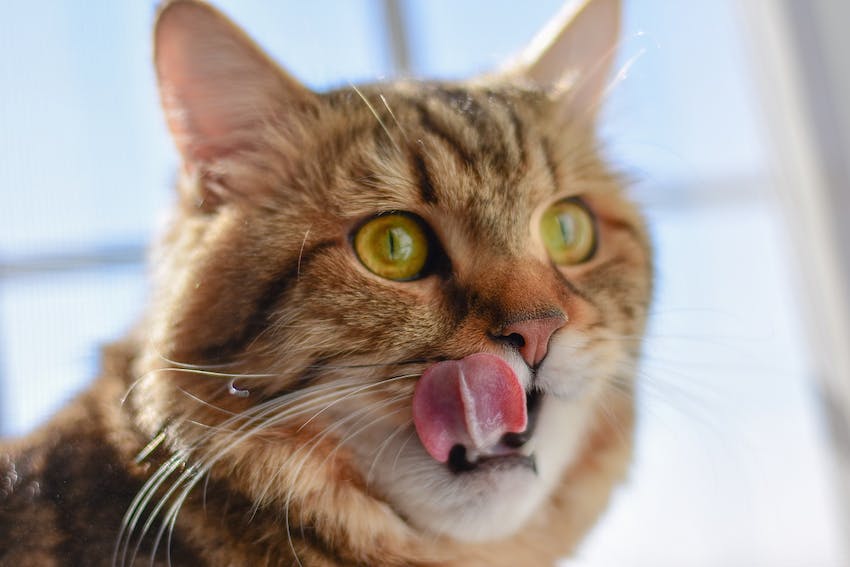
6 reasons your cat licks you
The exact reason a cat licks a human will often depend on the individual feline. Still, there are some key things to watch for in order to determine your own pet's motivation. Wilde points out several common reasons why your cat may choose to lick you.
1. Basic communication
Some cats are very chatty with their humans, and this may not always be in the form of vocals. Cats use a combination of body language, vocalizations, and behaviors to communicate with humans and other animals. Licking may simply be the cat's way of expressing a desire for attention, indicating that they want to play, or signaling affection towards you.
Also, it may be helpful to note if this is normal behavior for your furry family member. Do they lick, groom, or give kisses often? If so, licking may just be a preferred way to communicate with you.
2. Grooming instinct
Cats groom each other as a way of bonding and showing affection within their social group. When they lick their human caregivers, there's a good chance they are extending this behavior to include them in their social circle. Additionally, kittens are groomed by their mothers from a young age. Licking is not only a means of cleaning but also a way for the mother cat to show care and establish bonds. Cats may continue this behavior into adulthood, grooming their human companions as a display of nurturing behavior.
In this case, congratulations — your pet sees you as family!
3. Passive aggressive response
If your cat licking you feels more unpleasant than nurturing, they may be trying to communicate something else.
"Cat licking behavior could be an attempt to get you to change your own behavior," Wilde says. "If the cat seems agitated and licks you, it could be an effort to get you to stop doing what you’re doing or they may even want you to move.”
4. Underlying health condition
Although rare, a cat may sometimes start licking humans or even other pets as a source of comfort during illness. '
“Excessive licking may be associated with gastrointestinal disease, as it can be a sign of abnormal discomfort or nausea. Naturally, licking may mean that your cat is in pain,” says Wilde. "If your cat is excessively licking you or themselves, they may be trying to tell you they’re not feeling well."
If your pet does not usually lick you and/or appears to be acting unusual in any other way, give your veterinarian a call. Irregular licking behavior could be an indication of an underlying medical illness or behavioral condition. In these cases, it's always better to be safe than sorry.
5. You're tasty
Sometimes the right answer is the simplest one. If your cat starts licking you in a specific spot, check to see if you've spilled something or accidentally rubbed up against a substance they may find delicious. If you've recently been cooking or handling foot items they enjoy (like fish!), your cat licking you may a very natural response to finding a tasty substance. Consider it an indicator to go wash up.
6. Scent marking
Cats have scent glands in their tongues and on their skin. When they groom humans, they may be transferring their scent onto the person as a way to mark them with their own scent. So, your cat could just be further solidifying your bond and establishing you as their person as if to say, "Hands off, other cats! This one's mine!"
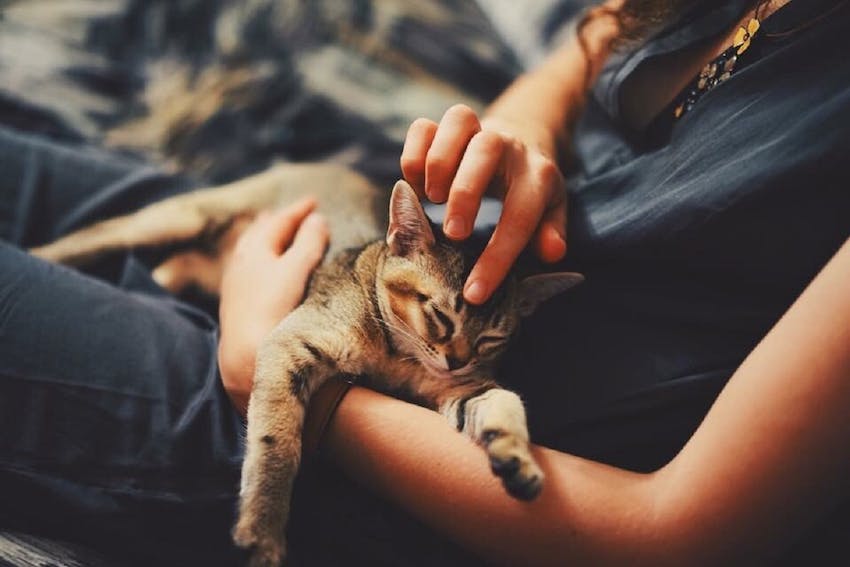
Why do cats lick themselves after you pet them?
Many pet owners may notice that their cat will lick themselves after they are petted. Naturally, this can be as confusing as them licking you. But just like any other cat behavior, it can have multiple explanations.
According to Wilde, a cat may be trying to groom themselves after being pet. While many still enjoy being pet, they may feel the need to "clean up" and ensure their fur lays back the way they want it to. It could also help readjust their whiskers and other sensory features, which may feel a bit off after you pet them. Your cat could also simply be trying to redistribute their scent around their body.
In any case, your cat licking themselves after you pet them is typically not cause for concern. That said, it's still worth paying attention to their overall demeanor. If your pet appears to be in pain in any way or keeps licking the same area, it's time to schedule an appointment with their veterinarian.
Why do cats bite then lick you?
If your cat is biting you first before licking you, there could be other causes. However, this is also a commonly observed behavior among cats who live together. They often do so in an attempt to engage one another in play, or as a grooming tactic. In other cases, they may do so as a result of being overstimulated (too much playtime/attention). It could also simply be a way of acknowledging one another as family members. When a cat bites and then licks a human, it can be a complex behavior with a variety of potential explanations along these lines:
- Playfulness
- Seeking attention
- Socialization
- Grooming instinct
- Overstimulation
- Communicating joy or pain/discomfort
To get a better idea of your kitty's reasoning, pay attention to their demeanor and other behaviors. Are they acting aggressive or otherwise unfriendly? Are the bites hard? If your cat's nips are more hurtful than gentle, despite them licking you afterward, they could be trying to send you a message. Look at your own behavior — your cat could be saying "I need a break" or "I want to be alone right now."
When to seek veterinary attention
Whether your cat is licking you or themself, it's important to keep tabs on their behavior. If they start doing anything out of the ordinary, it's a good idea to give your veterinarian a call. Your cat could just be expressing themself in a different manner, but changes in behavior could also indicate something is wrong. It's always better to be safe than sorry.
Speaking of being safe, now's a great time to explore cat insurance for your pet if you haven't already done so. Cat behavior like weird licking habits can be tough to decipher, but a good medical insurance plan can help ensure your pal can get the veterinary care they need.
Pet Parenting is the official dog and cat blog of Trupanion, a leader in the world of pet insurance. Here you’ll find useful dog and cat care tips, important veterinary insights, and an abundance of pet lifestyle topics. All of our articles are written by real humans with a love for pets, not AI. However, please note that the views expressed here are those of the individual authors and do not necessarily reflect those of Trupanion. Articles are reviewed by veterinarians for accuracy, but they are not a substitute for professional diagnosis and treatment. Always consult with your own pet’s veterinarian for advice.


